Capabilities

A practical path from requirement to repeatable build.

SuperX coordinates the decisions that shape a cable or harness programme: duty, materials, interfaces, manufacturability, validation and controlled delivery.

01Review02Configure03Release
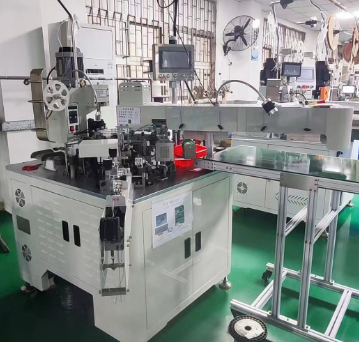
Representative automated wire processing equipment
02Representative process route
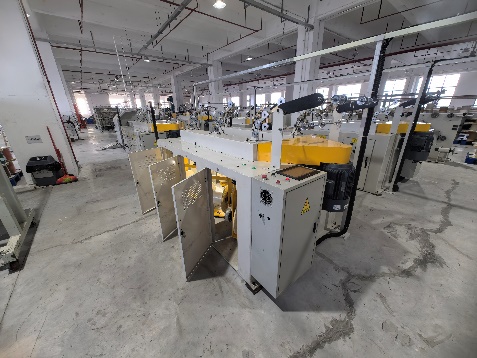
Representative guarded wire processing line

How we work

Four workstreams. One controlled specification.

The right production route starts with a technically complete brief and visible approval points.

01

Application review

We organise the information that drives cable selection and assembly design.

  • Voltage, current or data protocol
  • Motion cycle and minimum bend radius
  • Temperature, oil, chemical and outdoor exposure
  • Target market and required standards
02

Configuration & DFM

We align the electrical and mechanical interfaces with a buildable route.

  • Conductor, shielding and jacket options
  • Connector and pinout definition
  • Strain relief, conduit and overmoulding
  • Assembly drawing and BOM review
03

Sample & validation

Samples are useful when the approval criteria are defined before they arrive.

  • First-article checkpoints
  • Fit, routing and mating evaluation
  • Electrical and mechanical test planning
  • Change capture before release
04

Production coordination

Clear release data and programme communication support repeatability.

  • Approved specifications and revision control
  • Packaging and label requirements
  • Production and inspection documentation
  • Delivery planning for international projects

Project & production workflow

A controlled route from enquiry to customer acceptance.

Each project moves through visible technical, commercial and quality gates, with controlled routes for samples, order changes and nonconforming output.

Phase A Commercial & technical alignment

Definition before commitment
  1. 01RFQ intake

    Receive enquiry

    Capture the application, drawings or BOM, quantity, target market and requested delivery.

  2. 02Technical gate

    Confirm technical & compliance requirements

    Align interfaces, materials, revisions and any applicable Hazardous Substance Free requirements.

  3. 03Commercial gate

    Quote & confirm sample route

    Issue the offer and agree whether a prototype or approval sample is required before order release.

  4. 04Order gate

    Receive & review order

    Review the purchase order, revisions, quantity, delivery terms and any customer-requested changes.

Phase B Controlled fulfilment & release

Verification before delivery
  1. 05Release gate

    Confirm & release order

    Resolve review exceptions and release the agreed specification as the controlled order baseline.

  2. 06Fulfilment

    Production & approved sourcing

    Coordinate the confirmed build or sourcing route and keep schedule status visible.

  3. 07Quality gate

    Inspect & release

    Verify against agreed acceptance criteria before warehouse release and shipment approval.

  4. 08Delivery close

    Dispatch & customer acceptance

    Ship approved goods, capture customer acceptance and close the programme records.

Decision & exception controls

Feedback moves to the right approval point - not around it.

01

Sample approval loop

When a sample is required, it is prepared and submitted for review. Unapproved results return to specification confirmation before the order proceeds.

02

Order change loop

Customer order changes are re-reviewed. Open issues return to customer alignment; the route is closed if agreement cannot be reached.

03

Quality & schedule loop

Nonconforming output returns for correction and reinspection. Any resulting delivery impact is communicated and realigned with the customer.

Representative workflow. Operations, responsible production site, equipment and acceptance criteria are confirmed for each SuperX programme.

Production & inspection equipment

See the processes behind the assembly.

Representative production and inspection equipment from the project reference material, shown to make the process route tangible. Applicable capability, location, availability and acceptance criteria are confirmed during technical review.

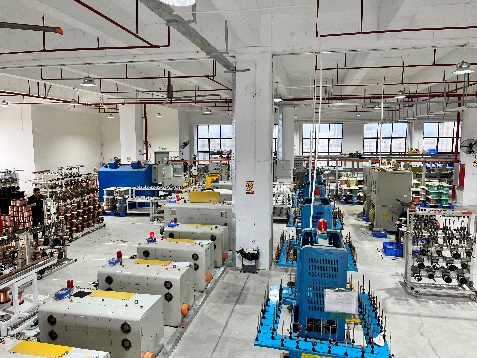
Overview of cable production and conductor processing equipment
01

Cable production floor overview

Representative line equipment for cable and conductor processing.

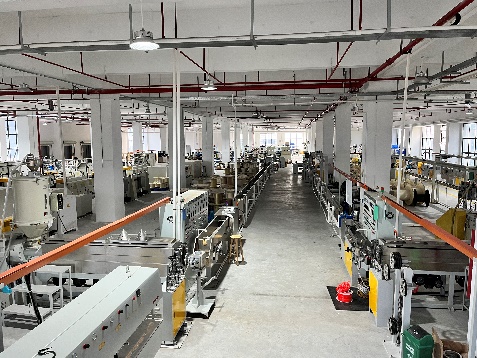
Continuous cable processing equipment arranged along a production line
02

Continuous cable processing line

A production-line view illustrating continuous cable processing routes.

Guarded wire processing equipment on a production floor
03

Guarded wire processing line

Enclosed processing equipment configured around a controlled material path.

Automated wire cutting, terminal processing and housing insertion equipment
04

Automated wire processing

Cutting, terminal processing and housing-insertion equipment for repeatable assembly steps.

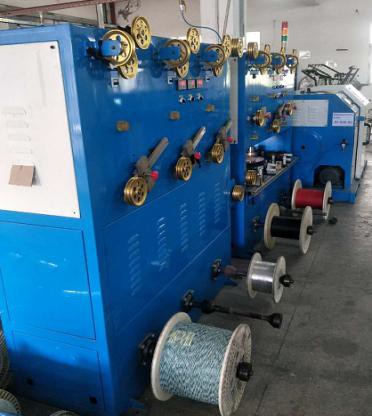
Multi-roller cable processing equipment with reels
05

Multi-roller cable processing

Representative roller and reel equipment used within cable-production workflows.

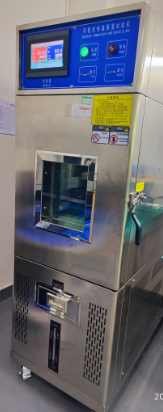
Temperature and humidity test chamber
06

Environmental conditioning

Temperature and humidity conditioning for programme-defined evaluation.

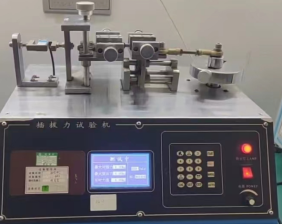
Insertion and withdrawal force test equipment
07

Mechanical interface testing

Insertion and withdrawal force testing for applicable connector interfaces.

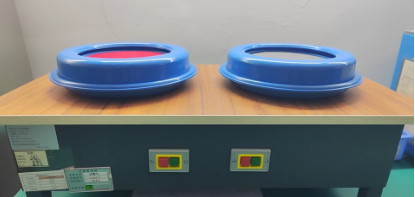
Sample preparation and polishing station
08

Sample preparation

Preparation and polishing equipment supporting inspection of cable samples.

Equipment shown for process illustration. Programme capability and the responsible production route are confirmed before quotation.

Build pathways

Match the process to the assembly.

Depending on the confirmed programme route, relevant processes can include wire cutting and stripping, crimping, soldering, terminal insertion, braiding, laser stripping, overmoulding, cable extrusion and controlled final assembly.

Capability availability, ownership and location are confirmed before quotation - never assumed from a category name.

A

Wire preparation

Cut, strip, twist, tin and prepare conductors for the specified termination.

B

Termination

Crimp, solder, weld and insert terminals or connector components as required.

C

Protection

Apply braid, conduit, heat-shrink, seals, strain relief and overmoulded features.

D

Verification

Connect programme requirements to the agreed inspection and test evidence.

Start with the application

A better RFQ starts with better inputs.

Send a drawing, BOM or sample reference together with operating conditions, quantity and delivery destination.

Start an RFQ